- 407731896@qq.com
- +86 15517795555
- No. 289, Zhonggong Road, Longyuan Street, Wuzhi County, Jiaozuo City
 English
 Chinese

News
The company has strong technical strength, advanced production equipment, and high-quality products
Location:Home > News > Industry dynamics
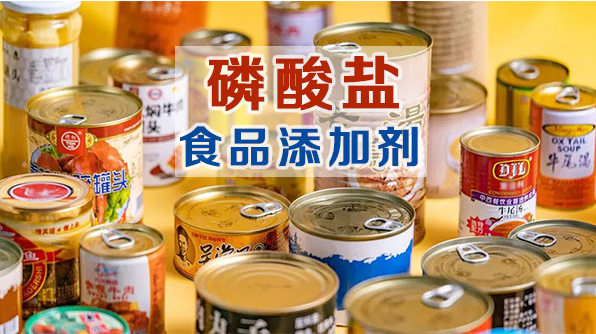
Phosphates are widely used in various food processing as important food ingredients and functional additives. Here are 13 common phosphate products used in the food industry.
1. Sodium tripolyphosphate
In the food industry, it is mainly used as a quality improver for canned food, dairy products, fruit juice drinks, and soy milk; Water retaining agents and tenderizers for meat products such as ham and luncheon meat; In the processing of aquatic products, it can not only retain water and soften, but also play a role in swelling and bleaching; In canned fava beans, the skin and beans can be softened; It can also be used as a softener, chelating agent, pH regulator, thickener, and in the beer industry.
Sodium tripolyphosphate is generally added at a concentration of 3-5 ‰ in food processing, with a limit of 3% in aquatic processing.
2. Anhydrous sodium pyrophosphate
As a quality improver, emulsifying dispersant, buffering agent, chelating agent, etc. in food processing, it has the properties of condensed phosphate, significant chelating and dispersing effects, and can resist flocculation; Can prevent fat oxidation, casein thickening and other effects. When the pH value is high, it has the effect of inhibiting food spoilage and fermentation. Mainly used for processing meat and aquatic products, it can improve water holding capacity, keep meat fresh and tender, and stabilize natural pigments. It can also be used in starch manufacturing and is often used in combination with other condensed phosphates.
Anhydrous sodium pyrophosphate is generally added at a concentration of 0.5-3 ‰ in food processing, with a limit of 3% in aquatic product processing.
3. Anhydrous trisodium phosphate
Used as buffering agents, emulsifiers, and nutritional supplements in the food industry; Prepare noodles as raw materials for alkaline water. It can also be used for refining saccharin, making starch, and as a detergent for food bottles and cans.
Anhydrous trisodium phosphate is generally added in food processing at a concentration of 3-5 ‰, with a limit of 1%.
4. Sodium tripolyphosphate
In the food industry, it serves as a starch improver, anti clouding agent for fruit juice beverages, water retention agent for meat processing, binder, chelating agent, water softener, dispersant, stabilizer for dairy products such as ice cream and cheese, and plays a role in bonding and water retention in aquatic product processing. It can also prevent food discoloration and vitamin C decomposition.
Sodium tripolyphosphate is generally added at a concentration of 3-5 ‰ in food processing, and is limited to a dosage of 3% in aquatic product processing.
5. Sodium hexametaphosphate
As a quality improver, pH regulator, metal ion chelating agent, adhesive, and expansion agent in the food industry. Can stabilize natural pigments and maintain color in bean, canned, and bean paste fillings; In canned food, fat can be emulsified to maintain a uniform texture; Used for canned meat and meat products to improve water retention and prevent fat spoilage. Adding it to beer can clarify the liquid and prevent turbidity. It is a high-quality water softener without sedimentation. Plays a role in water retention, expansion, and bleaching in aquatic product processing.
Sodium hexametaphosphate is generally added at a concentration of 3-5 ‰ in food processing, and is limited to a dosage of 3% in aquatic product processing.
6. Phosphoric acid
Used in the food industry as a sour taste agent, nutritional fermentation agent, and a characteristic water retaining agent for bread baking and canned fruits and vegetables, it inhibits microbial growth and extends shelf life; Used in beverages, fruit juices, cocoa products, cheese, and edible oils. Can be used for emulsification and acidification of cheese flavor coating. When used in combination with a deoxidizer, it can prevent oxidative rancidity of animal fats such as lard and their products; It can also be used for refining sucrose.
Phosphoric acid is generally added at a concentration of 3-5 ‰ in food processing.
7. Sodium dihydrogen phosphate
In the food industry, it is used as a quality improver, pH regulator, buffering agent, emulsifying dispersant, nutritional supplement, and water retention agent. Mainly used for cheese, beverages, jelly, tomato sauce, luncheon meat, and meat pickles, and can also be used as a modified starch additive.
The amount of sodium dihydrogen phosphate added in food processing is 3-5 ‰.
8. Disodium hydrogen phosphate
In the food industry, it is used as a quality improver, pH regulator, nutritional supplement, emulsifying dispersant, fermentation aid, binder, etc. Mainly used in pasta, soy milk products, dairy products, meat products, cheese, beverages, fruits, ice cream, and tomato sauce.
Sodium dihydrogen phosphate is added at a concentration of 3-5 ‰ in food processing.
9. Sodium acid pyrophosphate
Used as a rapid fermentation agent, quality improver, leavening agent, buffering agent, chelating agent, rehydration agent, and adhesive in food processing. The acidic component used in the synthesis of leavening agents for bread, pastries, etc. has a longer CO2 production time and is suitable for melting baked foods with low moisture content (such as pancakes). It can be used in combination with other phosphates as a water retaining agent for cheese, luncheon meat, ham, meat products, and seafood processing, as well as a rehydration agent for instant noodles.
Sodium acid pyrophosphate is generally added in food processing at a concentration of 0.5-3 ‰, and is limited to 1% in aquatic product processing.
10. Sodium polyphosphate
Suitable for processing coarse and emulsified meat products and poultry food. Such as frankfurter sausage, hot dog sausage, chicken sausage, table sausage, hamburger cake, ham sausage, instant noodles, Rice noodles and rice noodle processing. It is a high-quality seafood additive that can effectively maintain the unique flavor of seafood, enhance taste, reduce processing loss, improve texture, make the surface of the product glossy, bright and tough, and significantly improve product grade. During processing and freezing, the adhesion between meat and moisture is significantly enhanced. Preventing the loss of moisture during storage enhances the binding force between fat and moisture, thereby maintaining the edibility and tenderness of food during storage, making the taste and color of food more durable and stable, and preventing cell growth.
Sodium polyphosphate is generally added in food processing at a concentration of 3-5 ‰, with a limit of 3%.
11. Sodium aluminum phosphate acid
Used as a frying dough in the food industry and as a fermentation leavening agent when baking food. Adding it to feed can serve as a fat inhibitor in the livestock industry, effectively preventing the growth of fat in poultry and livestock.
The amount of sodium aluminum phosphate added in food processing is 1-2%.
12. Potassium tripolyphosphate
Used as a water retention agent, tissue improver, chelating agent, and water quality treatment agent in food processing. Widely used in the processing of meat products such as meat broth, luncheon meat, and cured meat. In the processing of frozen fish fillets, shrimp and other aquatic products, as well as dairy products such as cream, milk powder, cheese, condensed milk, and cream powder. Potassium tripolyphosphate has excellent solubility and dissolution rate, with higher yield and better taste compared to traditional phosphates.
The amount of potassium tripolyphosphate added in food processing is 3-5 ‰.
13. Potassium pyrophosphate
In the food industry, it is used as an emulsifier, tissue improver, chelating agent, and also as a raw material for alkaline water in noodle products, combined with other condensed phosphates. Usually prevent canned seafood from producing bird droppings and prevent canned fruits from discoloration; Improve the expansion of ice cream; Improve the yield of ham and sausage and the water retention of fish paste; Improve the taste and yield of noodles, and prevent cheese aging. The amount of potassium pyrophosphate added in food processing is 9g/kg (calculated as phosphorus) for processed cheese; Lunch meat is 3g/kg (calculated as p2o5); The frozen shrimp is 5g/kg (calculated as p2o5).
Previous:First